Tours
Activities
Places of interest
Where to eat
Where to sleep

Metz, Moselle, Lorraine

Are you in charge of the destination?
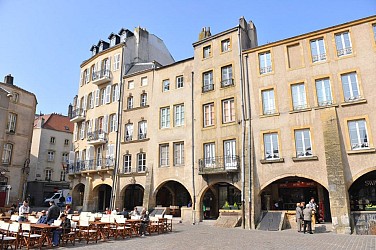
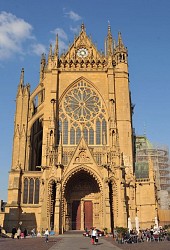
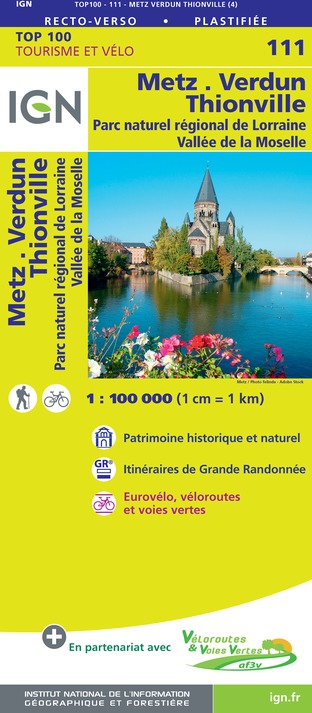
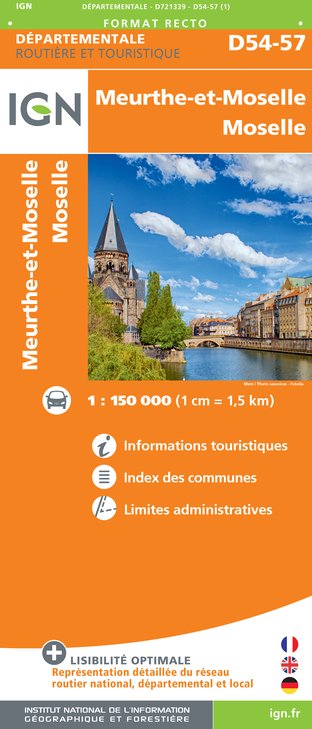
Metz, located in Moselle, Lorraine, is a hidden gem rich in history and culture. Known for its magnificent heritage, Metz offers a unique experience for visitors. Explore the majestic Saint-Stephen Cathedral, famous for its stunning stained glass windows and impressive Gothic architecture. Stroll through the charming cobbled streets of Old Metz, where history blends with modernity in a romantic an...See more
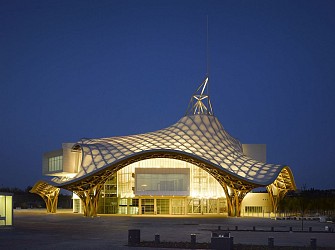
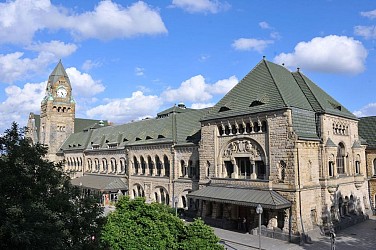
Walking around Metz

See more suggestions
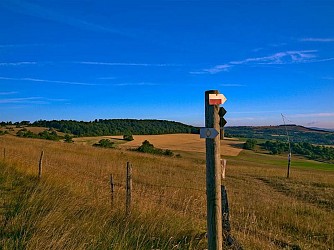
Embark on a hike in Metz.
See more suggestions

What to do in Metz

See more suggestions
Plan a perfect day in Metz with our bookable activities.
See more suggestions
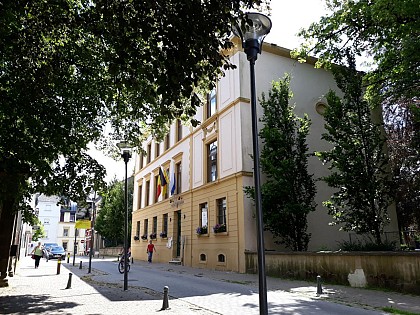
Gaspar Museum
73 km

Gaspar Museum

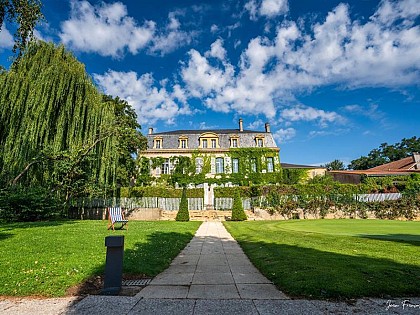
Museum Gaspar is housed in the residence of the middle-class family Gaspar from Arlon who had set up in this house (1893) that was built in 1842. It was renovated in 2004. The two most famous members of this family are animal sculptor Jean-Marie Gaspar (1861-1931) and Charles Gaspar (1971-1950) who was a photographer and a sponsor. He gave his house to the town of Arlon on the condition they make a museum of it, dedicated to his brother's work and that put into honour the history and the heritage of Arlon. At the first floor, theree are two restored salons identical to a middle-class salon from the early 20th century that show Jean-Marie Gaspar's sculptures. and the art and picture collection of Charles Gaspar. The rest of the first floor is dedicated to temporary exhibitions of the museum that alternates artv and history. A religion room shows collections about the abbey of Orval and to the people's devotion at the 18th century, and also relics from the ancient Saint-Martin church. But the Masterpiece is the famous altarpiece Retable de Fisenne - a 16th century masterpiece from the Antwerp school. Guided tours only on request by phone 063.600.654 or musee.gaspar@skynet.be (Original text by MT du Pays d?Arlon)This beautiful house was a bank at the origin. It was bought in 1893 by a middle-class family from Arlon, the family Gaspar. Jean Gaspar (1861-1931) was a sculptor. He was trained by the Antwerp sculptor Jef Lambeaux. His works are in bronze and in plaster and they are exhibited in the salons that have been restorated as they were in his house. His brother Charles (1871-1950) was a photographer, a collector and a sponsor. He gave this house to the town of Arlon. It hosts the library of the Archaeological Institute of the Belgian Province of Luxembourg and its secretary office since 1954. A wide part of the museum is also dedicated to temporary exhibitions about art and history of Arlon.

16 Rue des Martyrs 6700 Arlon
Book from 0 €Book
Show

What to visit in Metz

See more suggestions
Visit the museums and galleries of Metz.
See more suggestions
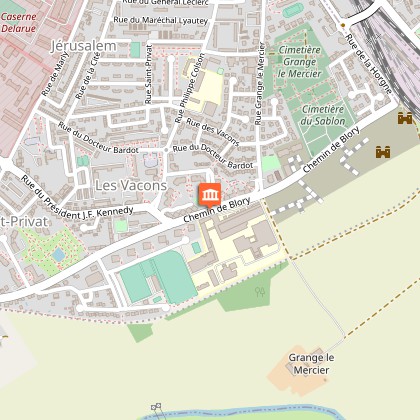
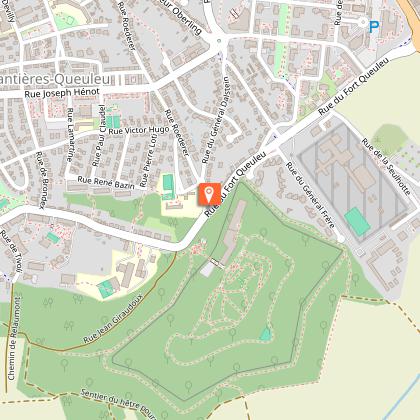
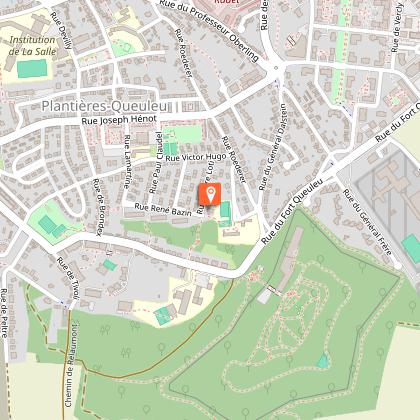
Fort de Queuleu
3.1 km

Fort de Queuleu

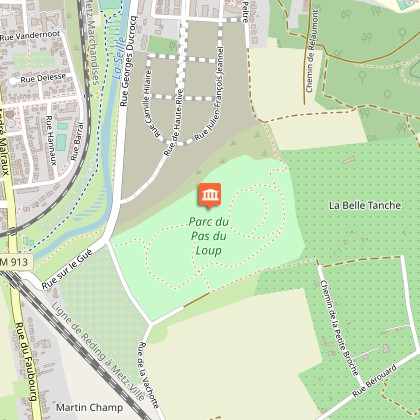
Fort de Queuleu is part of the first fortified belt linked to the defense of the city of Metz. Construction work began by the French during the Second Empire in 1867, and was largely taken over by the Germans during the first annexation following the defeat of 1870-1871. However, with the construction of Metz's second fortified belt from 1899 onwards, the Queuleu fort lost some of its strategic importance, and was only lightly modified. During the Second World War, the fort was used as barracks for French soldiers. Following the defeat of 1940, the fort was briefly used as a prisoner-of-war camp (Stalag). Then, between March 1943 and September 1944, the Natzweiler-Struthof concentration camp (Bas-Rhin) set up an annex to the fort, mainly for SS use. Around a hundred prisoners, mainly common Germans and Poles, were attached to the camp. Some took part in work on the Metz-Frescaty airfield. Between October 1943 and August 1944, a special camp (Sonderlager) run by the Gestapo is set up in Barracks II. Between 1,500 and 1,800 prisoners (men and women) were interrogated and interned there, before being sent to concentration camps (Natzweiler-Struthof, Dachau, etc.), reform camps (Schirmeck) or prisons. The special camp at Fort Queuleu saw the internment of resistance fighters, saboteurs, smugglers, draft dodgers, hostages and Russian prisoners. Most were locked up in overcrowded collective cells, without the possibility of washing, speaking or moving, under the fierce surveillance of SS guards and commandant Georg Hempen. Resistance leaders were isolated in individual cells, dark, damp dungeons to which only the commandant had access. Police officers "industrialized" interrogation and used torture. Internment conditions were terrible, and most prisoners were kept blindfolded, with their hands and feet tied. Thirty-six people died in the fort, and four managed to escape in April 1944. During the liberation of Metz, the fort came under fire between November 17 and 21, 1944, during fighting between the American army and German troops entrenched in the fort. The fort was bombed and severely damaged before surrendering. Between December 1944 and March 1946, the French administration set up a "Centre de Séjour Surveillé" (guarded residence center) in the fort. Initially reserved for German civilians and their families, the site was also used to detain administrative internees arrested for collaboration, propaganda, anti-patriotism or denunciation (up to 4,400 people were interned there). It was one of the largest centers of its kind in France. Foreigners of various nationalities were interned here (Germans, Spaniards, French, Italians, Luxembourgers, Poles, Yugoslavs, etc.). Between 1946 and 1947, a camp for German prisoners of war was set up in the fort. Finally, between 1948 and 1950, Indochinese workers occupied the site. Located at the entrance to the fort, the monument to the Resistance and the Deportation, inaugurated in 1977, today marks the entrance to this place of remembrance.

Allée Jean Burger Caserne II / Casemate A 57070 METZ
Show
Technopôle Metz 2000
3.3 km

Technopôle Metz 2000

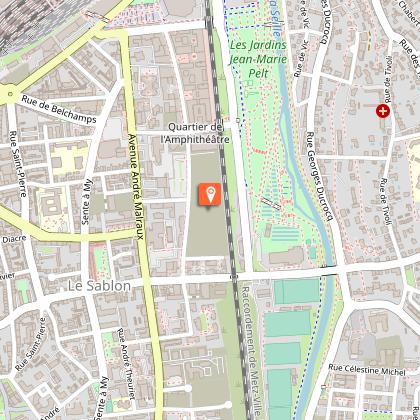
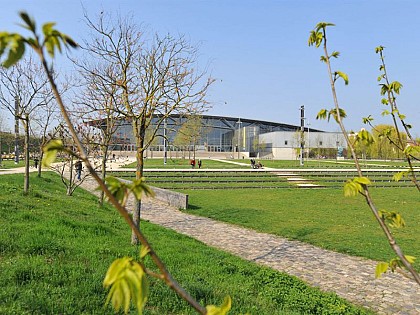
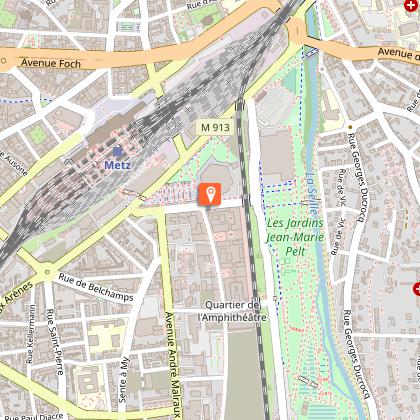
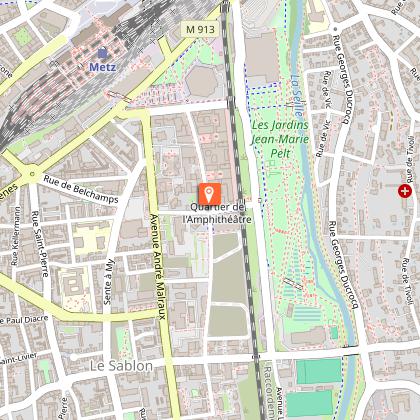
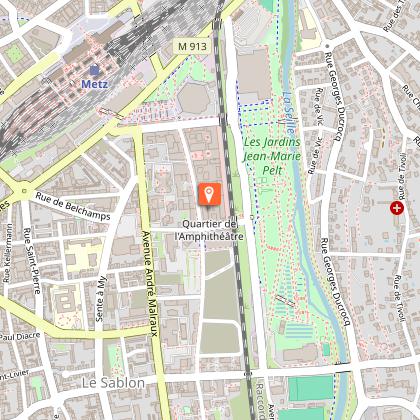
Marked by the great architectural trends that have marked our city's history, contemporary Metz has also embraced architectural creation. Whether it's the Technopôle Metz 2000, whose projects from 1984 onwards have created a real style - such as the CESCOM, designed by Metz architect Longo - or the Quartier de l'Amphithéâtre, where the Palais Omnisports de Metz, designed by renowned architect Chemetov, is being built, or of course the Arsenal, designed by Bofill, Metz's heritage is undoubtedly also rooted in twentieth-century creativity. In the case of the Metz 2000 Technopôle, the emphasis is on the architectural unity of the site, which has been designed as a new part of the city. This concern for quality is also shared by the site's private real estate players, who have wholeheartedly embraced the city's architectural requirements. Today, Metz Technopôle is characterized by its many facets: the technological and economic dimension, the human and technical dimension... ambitions for excellence that were placed from the outset in the field of urban planning and architecture. A source of multiple activities linked to the economy, industry, education and research, the Technopôle has won over both the residents of Metz who frequent the shores of Lake Symphonie on Sundays, and the companies who choose the site for the quality of its environment and the harmony of a district that deserves both the qualifier and the noun of Technology Park.

57000 METZ
Show

Where to eat in Metz

See more suggestions
Experience Metz's gastronomy.
See more suggestions

Where to sleep in Metz

See more suggestions
Stay in unique accommodations in Metz.
See more suggestions
Caution!
We have no information on the difficulty of this circuit. You may encounter some surprises along the way. Before you go, please feel free to inquire more and take all necessary precautions. Have a good trip! 🌳🥾